

Faith-Based Workbooks for Mental Health
Updated: Oct 30, 2025
Check out the complete collection at https://paperlesspoppy.patternbyetsy.com/
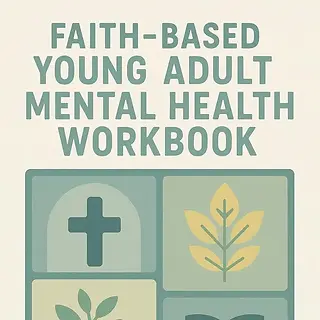
Explore the Faith-Based Mental Wellness Workbook Series—a thoughtfully crafted collection that combines Scripture, counseling insights, and reflection. Inspired by the experiences of a Christian counselor, each workbook offers guided journaling, creative exercises, and devotionals to nurture healing, growth, and peace in God’s presence. Topics include identity, anxiety, relationships, grief, purpose, and much more. Ideal for quiet time, personal study, or group use, each page leads you toward renewal, restoration, and deeper faith.

Faith-Based Mental Health Workbook 
Faith-Based Mental Health Workbook 






How Workbooks Help You Become Grounded and Aligned
When life feels disorganized or heavy, it’s easy to lose your sense of direction. You forget things, feel detached, and notice that you’re reacting more than responding. Over time, this impacts your relationships — you might withdraw, feel short-tempered, or disconnected from the people you care about. It shows up at home in how you communicate, and at work in how you focus and make decisions. When your thoughts, emotions, and body feel out of sync, daily life becomes harder to manage.
That’s where a workbook can help. A good workbook doesn’t just “give advice” — it gives structure to your healing process. It helps you reconnect your thoughts, emotions, and faith so you can approach your world clear-headed, confident, and aligned.
1. Grounding Reconnects You to Reality
When you feel scattered, it’s hard to know what’s true. Writing inside a workbook helps you name what’s real — what’s happening internally versus what’s simply emotion or fear. That clarity matters. When you can see things clearly on paper, you make better choices and regain a sense of stability.
This is where grounding begins: knowing what’s yours to carry and what isn’t. It’s a calm return to reality — one page at a time.
2. Journaling Builds Self-Awareness and Clarity
Journaling isn’t busywork — it’s brain work. When thoughts stay in your head, they spin endlessly. Writing makes those thoughts linear — one after another — so you can see the pattern and direction. That shift is powerful.
When you write, your mind and emotions begin to connect. What once felt jumbled starts to make sense. You move from “I don’t know what’s wrong with me” to “I see what’s happening.” That’s the moment of alignment — when self-awareness turns into peace and confidence.
People often say, “I feel clearer after writing.” That’s not an accident. It’s the process of your mind organizing your experience so you can come to a place of knowing.
3. Reflections and Quotes Guide Perspective
Faith-based workbooks often include short Scriptures or quotes that reset your thinking. Truth on the page keeps you grounded when emotions are loud. A single verse can shift your entire perspective:
“Be still and know that I am God.” — Psalm 46:10
Reflection questions help you apply what you’re reading. They move you from information to transformation. Each page invites a simple, powerful pause to think about how faith speaks into your current reality.
4. Art and Visual Exercises Help You Process Emotion
Some emotions are too complex for words. That’s why creative pages matter. Drawing, coloring, or mapping emotions uses both sides of your brain — the logical and the expressive — helping you release tension and process feelings in a healthy way.
You don’t need to be artistic. You just need to engage. Art-based exercises give emotions motion. When they’re released, peace follows.
5. Action Steps Keep You Moving Forward
Insight only matters if it leads to change. Workbooks help you take small, consistent steps that build momentum — whether it’s setting boundaries, practicing gratitude, or tracking emotional triggers.
These simple actions help you build stability in your daily life. You stop feeling like life is happening to you and start realizing you’re capable of shaping your next step.
6. Alignment Strengthens Emotional and Relational Health
When your mind, body, and spirit are working together, everything else improves. You think with clarity, communicate with kindness, and show up with intention. At home, that means less conflict and more understanding. At work, it means better focus and emotional steadiness under pressure.
Alignment isn’t just a feeling — it’s a foundation. It changes how you move through the world.
7. Workbooks Help You Find Your Place Again
You don’t have to stay disconnected or uncertain. A well-designed workbook helps you gather what’s been scattered — your thoughts, your emotions, your sense of purpose — and put them back into order.
Over time, that process helps you find your footing again. You remember who you are, what you value, and where God is leading you. You approach your relationships, your home, and your work from a centered place — grounded and whole.
Ready to start? Explore faith-based workbooks created by a Christian counselor to help you reconnect your thoughts, emotions, and faith. Each workbook includes guided journaling, reflection questions, and practical tools to help you move from confusion to clarity — and from stress to peace.
📘 Find your next step toward balance and alignment https://paperlesspoppy.patternbyetsy.com/


Comments